The walk at a glance
Walkers: Jess, Lora, Leela, Saira, Elias, Connie
Distance: 10.12 miles
Settlements: Hullbridge, Hockley, Eastwood
Terrain: Mostly flat
Weather Conditions: Blue skies and sunshine
Water Sites: River Crouch, River Roach, creeks and tidal inlets
Mood: Curious
A question to walk with
As we reach the tidal Crouch, how does our relationship with water change? What are the unique 'rights' of a tidal landscape and its commons?
It’s a beautiful day – and of all the walks we’ve done so far, I’m most excited for this one. Leela and I get off the train at Battlesbridge to meet Lora and Jess, and Elias and Connie who are joining us for this stretch. Connie is a Gallery Coordinator at the Minories in Colchester and Elias is the Local Nature Recovery Coordinator at Essex County Council. After a round of quick introductions and a reminder of today’s provocation, we set off.
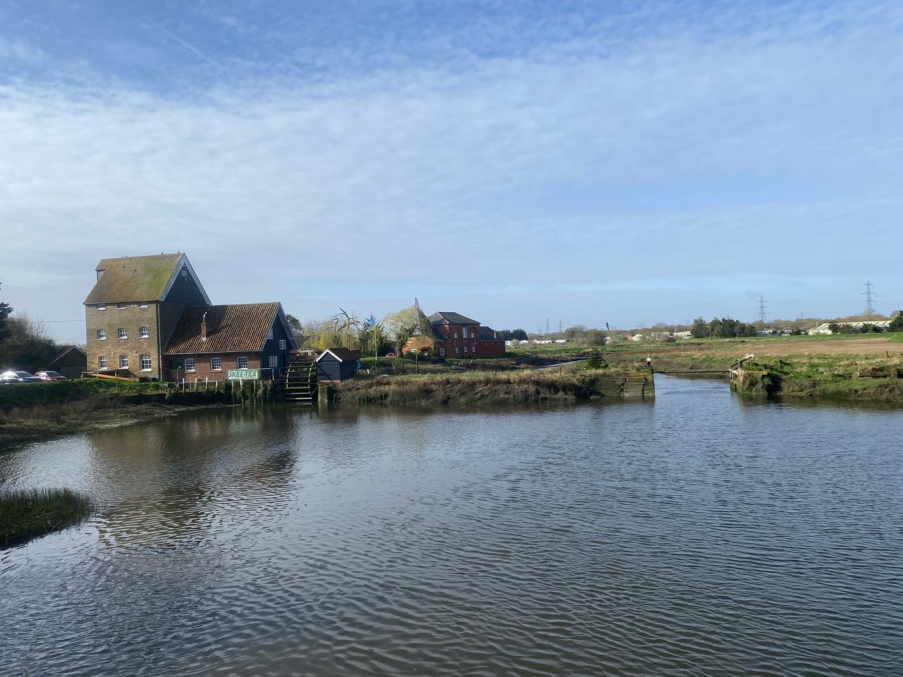
The Saffron Trail from Battlesbridge to Hullbridge begins almost gradually, as so many estuarine journeys do - not with a dramatic reveal, but with a gradual loosening. We leave the village, known for antique shops, including the large Battlesbridge Antiques Centre housed in a converted mill. The landscape still feels held: hedged fields, low wooden fences, and the quiet order of rural edges. We cross over the bridge, a historic crossing over the tidal River Crouch, dating back to at least 1872 in its current form.
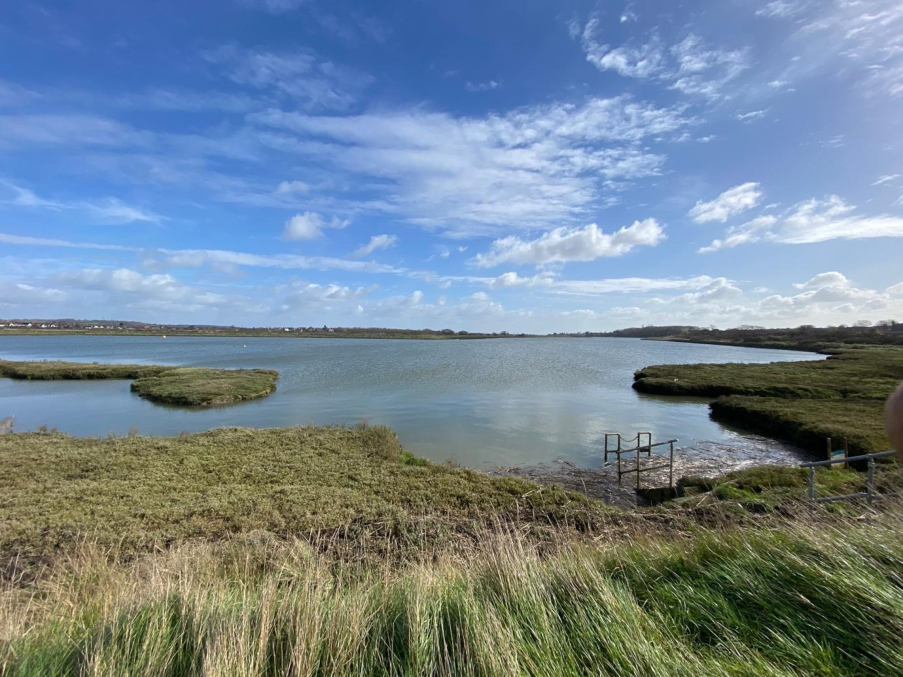
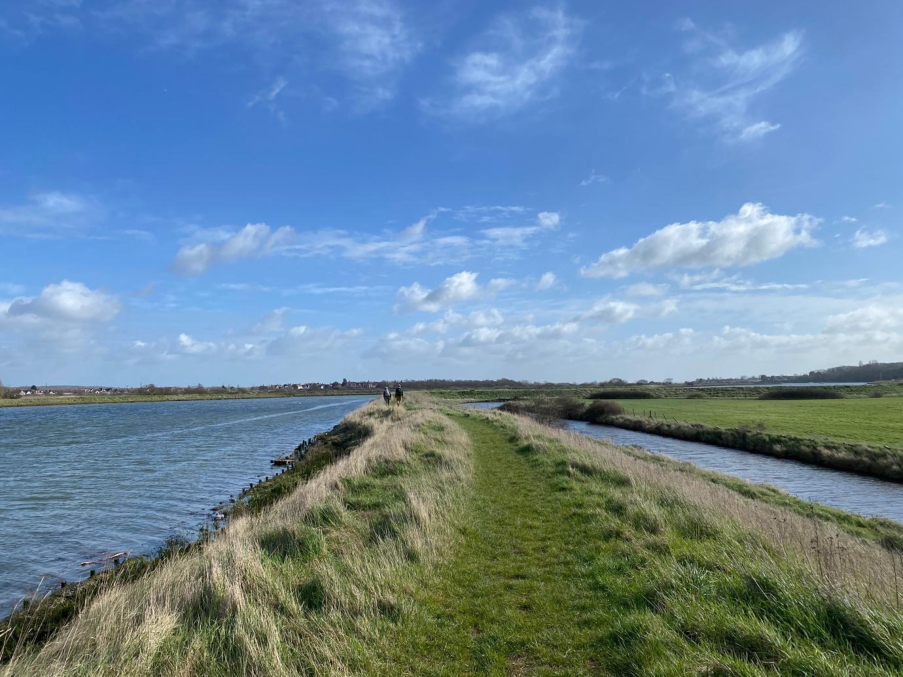
The first section entails walking on a road with little verge; we walk in single file, as speeding cars drive around us. There are a few hairy bends, but soon enough we’re on a green corridor, and the sound of cars whooshing past fades. The set route we’re supposed to follow cuts across the green; however, we decide to follow the tidal river. When it comes into view, it is not a fixed line but a shifting presence. The tidal Crouch resists the idea of a stable boundary. Its edges are mutable, expanding and contracting with the rhythm of the tide. Mudflats stretch outward at low water, glistening and exposed, while at high tide the river swells, reclaiming space and redrawing its limits. This is where the provocation sharpens: how does our relationship with water change when it cannot be fixed?
Each step negotiates softness, slipperiness, and the possibility of change. Water is no longer contained; it is implied in the ground, in the texture of the terrain.
In a tidal landscape, water demands recognition not as an object but as an agent. It is not simply there; it acts. It advances and retreats, erases and deposits, unsettles and reshapes. The walker becomes aware of time in a new way - not just the time it takes to complete the route, but tidal time, cyclical and indifferent to human schedules. The trail, so reliable earlier, feels almost provisional here. The mapped line cannot fully account for the conditions underfoot or the state of the tide. Navigation becomes interpretive.
This shift introduces a different kind of humility. Earlier, the path suggested a right of passage - a clear entitlement to move through the landscape. But along the tidal Crouch, that sense of right becomes conditional. The ground may not hold. The path may disappear beneath water. Access depends on timing, awareness, and adaptation. In this sense, the tidal landscape seems to assert its own rights - the right to change, to obscure, to resist being fixed into a single, stable form.
These “rights” are not codified, but they are felt. They emerge through the walker’s experience of uncertainty and adjustment. One must yield to the conditions rather than impose upon them. The mudflats, are not simply empty spaces but active zones of transformation - sites where sediment is deposited and reshaped with each tide. To step onto them carelessly is to misunderstand their nature. They do not offer the same kind of welcome as a dry footpath.
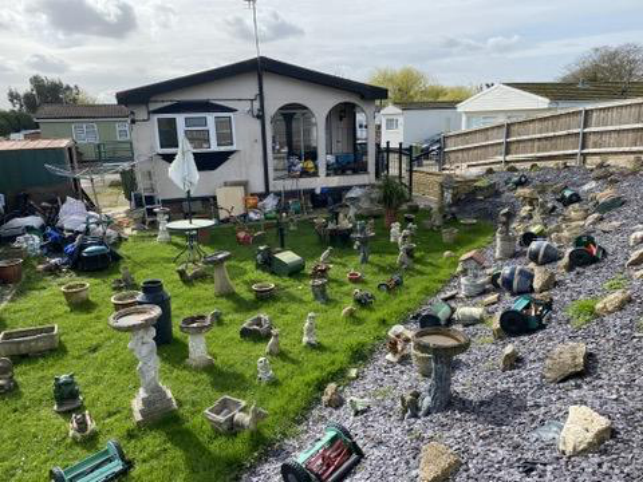
At the same time, the tidal landscape invites a different kind of attention. Birds gather along the water’s edge, tracing the shifting line between land and river. Their movements mirror the rhythms of the tide, suggesting an attunement that human walkers must learn, if only briefly. The soundscape changes too: the quiet lap of water against mud, the distant call of waders, the soft suction of each step in wet ground. These sensory details reinforce the sense that this is a place governed by processes rather than boundaries. The path through the woods beside the water front leading towards Hullbridge is littered
As the walk continues toward Hullbridge, the presence of the river becomes more integrated into the built environment. Houses and boats appear, and the river is once again framed - by moorings, embankments, and human use. Yet even here, the tidal character persists. Boats tilt at low tide, resting on the mud, then rise again with the returning water. This is the first encounter with lived data: not mapped coordinates, but material evidence of tidal rhythms, labour patterns, and waiting. Fishing communities have always worked with this temporality - not against it. The river does not offer constant access; it offers windows.
The built structures accommodate the river’s movement rather than attempting to eliminate it entirely.
We encounter a large walking group of older people, maybe residents. A man on his boat in the river calls out to his friend on shore. We ask Leela what she thinks of the architecture of various dwellings. We pass by the Smugglers Den Members Club, a small quirky pub that happens to be closed. Lora shares her joyous experiences of the pub.
By the time the trail reaches Hullbridge, we have moved through a subtle but profound shift. At Battlesbridge, water was backgrounded, managed, and largely invisible as a force. By the tidal reaches of the Crouch, it becomes central, dynamic, and impossible to ignore. The relationship changes from one of control to one of negotiation.
The question of the “rights” of a tidal landscape lingers. Perhaps these rights are less about legal frameworks and more about recognition: the acknowledgment that certain landscapes cannot—and should not—be fixed into static forms. The tidal Crouch resists enclosure, not through dramatic resistance but through constant, quiet change. It asks for a different kind of engagement, one that is responsive rather than directive.
The “rights” of this landscape seem to emerge through its behaviour. The river claims space twice daily, advancing and retreating without regard for human boundaries. The mudflats, far from being empty, are active zones of deposition and erosion. To walk here is to enter a system that is constantly in flux, where the idea of a fixed path becomes unstable.
Walking the Saffron Trail along this stretch becomes an exercise in that responsiveness. The trail provides a guide, but it is the landscape itself that ultimately determines the terms of movement. In this way, the walk is not just a passage through space, but a negotiation with a living system - one that asserts, in its own subtle way, its right to remain in motion.
Leaving Hullbridge, the path follows the river briefly before turning inland, as if immediately reminding us that access to water is never continuous.
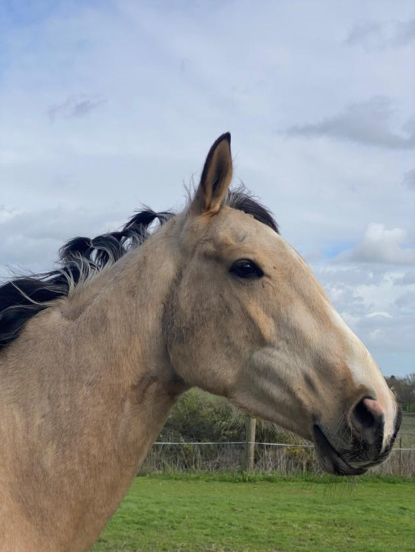
As the route moves away from the river, we walk inland, but the air carries salt. Crossing fields and edging settlements, the estuary remains present as an absence. Drainage ditches and low-lying ground suggest former marshes - land that has been claimed, managed, and redefined over time. These are not neutral fields; they are altered ecologies, shaped by centuries of negotiation between land and water. We find some woods where we settle down to have lunch, there are thousands of wood ants; they’re everywhere, enjoying their own foraging endeavours. After lunch, we cross the train line and climb a hill upward, passing by horses and burrows as we head towards Hockley.
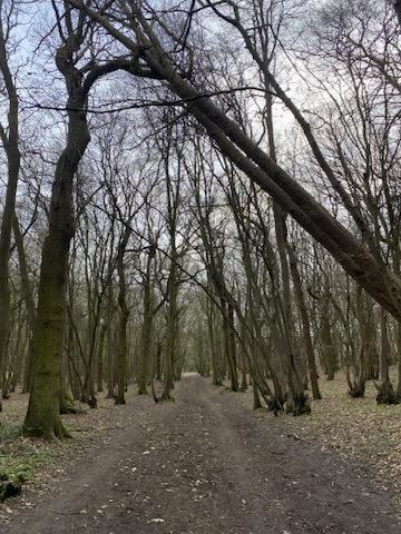
At Hockley, we walk through Hockley woods, the largest remaining ancient wild wood in Essex. We skim the edges of arid fields and then again are in woods, this time, the Scrubs.
Once out of the Scrubs, we reroute once again, and decide on Elias’ suggestion, to follow the water instead. We are rewarded with a small waterfall and views of the lake at Cherry Orchard Jubilee Country Park.
The sky turns grey and soon our walk comes to an end at Oakwood Park, Eastwood where Elias points out the trees he planted. We linger for a bit before going in different directions.